The 1.4-liter 16-valve Volkswagen BUD engine was produced from 2006 to 2010 and was installed on a number of popular models such as Golf, Polo, Cuddy, as well as Fabia and Octavia. This motor replaced a similar BCA power unit on the conveyor and gave way to the CGGA.
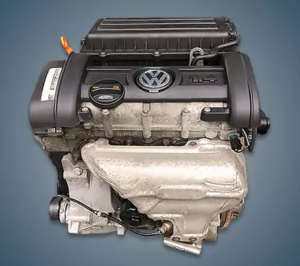
The EA111-1.4 series includes: AEX, AKQ, AXP, BBY, BCA, BUD, CGGA, CGGB.
Specifications
| Production years | 2006-2010 |
| Displacement, cc | 1390 |
| Fuel system | injector |
| Power output, hp | 80 |
| Torque output, Nm | 132 |
| Cylinder block | aluminum R4 |
| Block head | aluminum 16v |
| Cylinder bore, mm | 76.5 |
| Piston stroke, mm | 75.6 |
| Compression ratio | 10.5 |
| Features | DOHC |
| Hydraulic lifters | yes |
| Timing drive | belt |
| Phase regulator | no |
| Turbocharging | no |
| Recommended engine oil | 5W-30 |
| Engine oil capacity, liter | 3.2 |
| Fuel type | petrol |
| Euro standards | EURO 4 |
| Fuel consumption, L/100 km (for VW Polo 4 2008) — city — highway — combined |
8.3 5.2 6.3 |
| Engine lifespan, km | ~275 000 |
The engine was installed on:
- Volkswagen Caddy 3 (2K) in 2006 – 2010;
- Volkswagen Golf 5 (1K) in 2006 – 2008;
- Volkswagen Golf Plus 1 (5M) in 2006 – 2010;
- Volkswagen Polo 4 (9N) in 2006 – 2009;
- Skoda Fabia 1 (6Y) in 2006 – 2007;
- Skoda Octavia 2 (1Z) in 2006 – 2010.
Disadvantages of the VW BUD engine
- This engine is considered average in terms of reliability and, moreover, it is quite noisy.
- The main causes of floating engine speeds are throttle or EGR contamination.
- Due to poor design, the oil receiver is often clogged, which is dangerous for the engine.
- Timing belts have a low resource, and the valves bend when at least one of them breaks.
- Also, the network complains about oil leaks and quick failure of ignition coils.