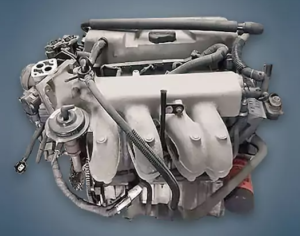
The third generation of the Escort model was equipped with the 2.0-liter Ford F8CE or Split Port SPI 2000 engine, which was manufactured between 1997 and 2002 for the US and Canadian markets. For the initial years, this power unit was manufactured under the F7CE index with only slight modifications.
The Split Port line also includes internal combustion engines: YS4E.
The engine was installed on:
- Ford Escort USA Mk3 in 1997 – 2002.
Specifications
| Production years | 1997-2002 |
| Displacement, cc | 1988 |
| Fuel system | distributed injection |
| Power output, hp | 111 |
| Torque output, Nm | 169 |
| Cylinder block | cast iron R4 |
| Block head | aluminum 8v |
| Cylinder bore, mm | 84.8 |
| Piston stroke, mm | 88 |
| Compression ratio | 9.35 |
| Features | CVH |
| Hydraulic lifters | yes |
| Timing drive | belt |
| Phase regulator | no |
| Turbocharging | no |
| Recommended engine oil | 5W-30 |
| Engine oil capacity, liter | 3.78 |
| Fuel type | petrol |
| Euro standards | EURO 3 |
| Fuel consumption, L/100 km (for Ford Escort 1998) — city — highway — combined |
10.2 6.7 7.9 |
| Engine lifespan, km | ~250 000 |
Disadvantages of the F8CE engine
Valve seats falling directly into the cylinders is the most well-known engine issue.
Frequent overheating brought on by coolant leaks is the next most common.
The cost of spare parts for this power unit is not encouraging, and they are not widely available.
Furthermore, the engine makes a lot of noise, and the rumble under the hood gets louder as you go.
The valve does not bend when the belt breaks, which is the only advantage.