Kuga replaced its 1.6-liter engine with a 1.5-liter Ford M9MA or Kuga 1.5 EcoBoost turbo engine, which was assembled between 2014 and 2019. This motor was created following the introduction of tax breaks for internal combustion engines under 1500 cm³ in several nations.
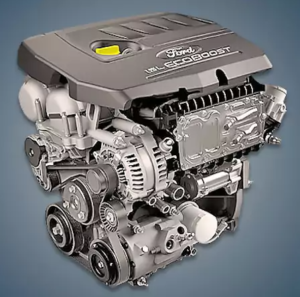
The 1.5 EcoBoost line also includes engines: M8DA, M8MA and M9DA.
Specifications
| Production years | 2014-2019 |
| Displacement, cc | 1498 |
| Fuel system | direct injection |
| Power output, hp | 182 |
| Torque output, Nm | 240 |
| Cylinder block | aluminum R4 |
| Block head | aluminum 16v |
| Cylinder bore, mm | 79 |
| Piston stroke, mm | 76.4 |
| Compression ratio | 10.3 |
| Features | intercooler |
| Hydraulic lifters | no |
| Timing drive | belt |
| Phase regulator | Ti-VCT |
| Turbocharging | yes |
| Recommended engine oil | 5W-20 |
| Engine oil capacity, liter | 3.8 |
| Fuel type | petrol |
| Euro standards | EURO 5/6 |
| Fuel consumption, L/100 km (for Ford Kuga 2017) — city — highway — combined |
10.7 6.4 8.0 |
| Engine lifespan, km | ~220 000 |
The engine was installed on:
- Ford Kuga Mk2 in 2014 – 2019.
Disadvantages of the M9MA engine
Fearful of overheating, the engines in this line pierce the gasket and drive the cylinder head right away.
Block head cracks result from the cooling system’s electrocoupling failing;
The internal combustion engine’s piston group experiences detonation, which is known as the LSPI problem;
Soot quickly overgrows exhaust valves, and decarbonization is costly and challenging;
The valve clearances need to be adjusted about every 100,000 kilometers of escape.