From 2008 to 2020, the 1.6-liter Chevrolet F16D4 or LDE engine was assembled in South Korea and installed in the Aveo and Cruze, the company’s two most well-liked Asian models. This power unit is nearly an exact replica of the well-known Opel Z16XER engine.
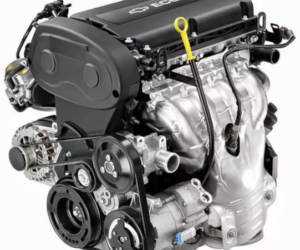
A cast-iron cylinder block, an aluminum 16-valve head without hydraulic compensators, and a traditional timing belt drive were the main characteristics that set these engines apart, aside from the DCVCP type phase regulators on the intake and exhaust. A proprietary VGIS geometry change system was installed in the plastic intake manifold.
Two years later, a version of the LXV appeared with a compression ratio of 11.0, producing 124 horsepower and 154 Nm.At first, this unit had an LDE index, a compression ratio of 10.8, and developed 113 horsepower and 152 Nm.
The F series also includes engines: F14D3, F14D4, F15S3, F16D3, F18D3 and F18D4.
The engine was installed on:
- Chevrolet Aveo T300 in 2011 – 2020;
- Chevrolet Cruze 1 (J300) in 2008 – 2016.
Specifications
| Production years | 2008-2020 |
| Displacement, cc | 1598 |
| Fuel system | distributed injection |
| Power output, hp | 113 / 124 |
| Torque output, Nm | 152 / 154 |
| Cylinder block | cast iron R4 |
| Block head | aluminum 16v |
| Cylinder bore, mm | 79 |
| Piston stroke, mm | 81.5 |
| Compression ratio | 10.8 / 11.0 |
| Features | no |
| Hydraulic lifters | no |
| Timing drive | belt |
| Phase regulator | DCVCP intake and exhaust |
| Turbocharging | no |
| Recommended engine oil | 5W-30 |
| Engine oil capacity, liter | 4.5 |
| Fuel type | petrol |
| Euro standards | EURO 4/5 |
| Fuel consumption, L/100 km (for Chevrolet Cruze 2012) — city — highway — combined |
8.8 5.1 6.5 |
| Engine lifespan, km | ~350 000 |
| Weight, kg | 115 |
Disadvantages of the F16D4 engine
The phase regulator failure of this engine is its most well-known issue. They were frequently replaced under warranty in the beginning, even after 30,000 kilometers, but the resource eventually expanded. Here, the grids of solenoid valves can clog even with low-quality oil.
The oil heat exchanger, which flows in both directions—that is, oil enters the coolant here and antifreeze gradually dilutes the lubricant, causing wear on the oil pump—is another weak point of this power unit.
Regular electrical failures cause a lot of problems. The ECU is frequently malfunctioning, and it’s not always the board’s fault; its connectors may also burn out, and the ignition coil module and electronically controlled thermostat frequently malfunction.
Additionally, when the timing belt breaks, the crankcase ventilation valve’s membrane frequently collapses, oil continuously seeps through the seals, and the valve bends. Additionally, since there are no hydraulic lifters here, remember to adjust the valves’ thermal clearances.