The 2.4-liter Hyundai G4CS engine was produced from 1986 to 2007 under license from Mitsubishi and was essentially a copy of the 8-valve version of the Japanese power unit under the 4G64 index. Basically, the motor was installed on the Starex minibus, but it is also found on passenger models.
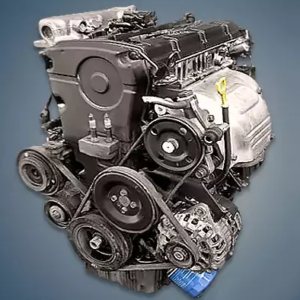
Sirius family: 1.6 L – G4CR; 1.8 L – G4CN, G4CM, G4JN; 2.0 L – G4CP, G4JP; 2.4 L – G4JS, G4CS.
The engine was installed on:
- Hyundai Grandeur 1 (L) in 1986 – 1992; Grandeur 2 (LX) in 1992 – 1998;
- Hyundai Sonata 2 (Y2) in 1988 – 1991;
- Hyundai Starex 1 (A1) in 1997 – 2007.
Specifications
| Production years | 1986-2007 |
| Displacement, cc | 2351 |
| Fuel system | injector |
| Power output, hp | 110 – 120 |
| Torque output, Nm | 180 – 200 |
| Cylinder block | cast iron R4 |
| Block head | aluminum 8v |
| Cylinder bore, mm | 86.5 |
| Piston stroke, mm | 100 |
| Compression ratio | 8.5 – 8.6 |
| Features | no |
| Hydraulic lifters | yes |
| Timing drive | belt |
| Phase regulator | no |
| Turbocharging | no |
| Recommended engine oil | 10W-40 |
| Engine oil capacity, liter | 4.3 |
| Fuel type | petrol |
| Euro standards | EURO 1/2 |
| Fuel consumption, L/100 km (for Hyundai Starex 2003) — city — highway — combined |
16.8 9.9 12.7 |
| Engine lifespan, km | ~300 000 |
| Weight, kg | 159.7 (without attachments) |
Disadvantages of the Hyundai G4CS engine
- The most famous engine problem is the low resource of timing belts and balancers.
- Due to the vibration of the balancer shafts, the supports of the power unit are quickly destroyed.
- The use of low-quality oils greatly affects the resource of hydraulic lifters.
- At high mileage, the exhaust manifold bursts, but usually it can be welded.
- Floating speeds are also common due to contamination of the throttle or idle speed controller.