The third generation of the well-liked Focus model and the C-MAX compact MPV were equipped with the 1.6-liter Ford PNDA or 1.6 Duratec Ti VCT 123ps engine, which was manufactured between 2010 and 2019. All troublesome components, such as hydraulic compensators and turbocharging, are removed from Ford PNDA. This allowed for the most straightforward design, which eliminates nearly all troublesome parts from the power unit. As a result, issues are rare and maintenance and repair costs are significantly lower.
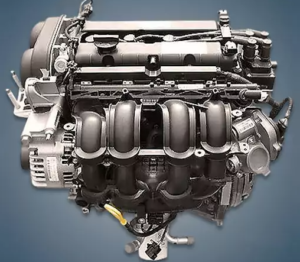
DURATEC Ti-VCT family:
1.5 L – UEJB;
1.6 L – IQDB, HXDA, PNBA, PNDA, SIDA, XTDA.
The engine was installed on:
- Ford C-Max Mk2 in 2010 – 2014;
- Ford Focus Mk3 in 2010 – 2019.
Specifications
| Production years | 2010-2019 |
| Displacement, cc | 1596 |
| Fuel system | distributed injection |
| Power output, hp | 125 |
| Torque output, Nm | 159 |
| Cylinder block | aluminum R4 |
| Block head | aluminum 16v |
| Cylinder bore, mm | 79 |
| Piston stroke, mm | 81.4 |
| Compression ratio | 11.0 |
| Features | no |
| Hydraulic lifters | no |
| Timing drive | belt |
| Phase regulator | Ti VCT |
| Turbocharging | no |
| Recommended engine oil | 5W-30 |
| Engine oil capacity, liter | 4.1 |
| Fuel type | petrol |
| Euro standards | EURO 5 |
| Fuel consumption, L/100 km (for Ford Focus 2012) — city — highway — combined |
8.4 4.7 6.0 |
| Engine lifespan, km | ~350 000 |
| Weight, kg | 91 |
Disadvantages of the PNDA engine
This is a contemporary engine with an open cooling jacket and an aluminum block. After 100,000 kilometers, the cylinders frequently become elliptical, at which point a piston knock occurs. Many people ignore this because there is typically no oil consumption.
Phase regulators frequently dropped to 100,000 kilometers on the motors of this series during the early years of production; however, since 2007, improved clutches with significantly longer lifespans have been installed. The primary issues are now caused by solenoid valves that flow on a regular basis.
This power unit’s weak points also include a gas pump that isn’t very dependable, high-voltage wires that break frequently, and current crankshaft oil seals. Additionally, keep in mind that there are no hydraulic lifters and that the valve clearance must be periodically adjusted.